
Not every symptom points equally toward low testosterone. Learn which changes warrant evaluation, what else may explain them, and why testing matters.


Low testosterone may cause a lower sex drive, fewer spontaneous erections, reduced muscle mass, infertility, or—in more pronounced cases—anemia and low bone density. Fatigue, mood changes, poor concentration, and weight gain can occur too, but they are much less specific: sleep disorders, medications, depression, thyroid problems, and other conditions can cause similar symptoms. Symptoms are a reason to consider an evaluation, not a diagnosis.
If you’re wondering whether testosterone is involved, the most useful question is not “How many symptoms do I have?” but “Which changes are new, persistent, and worth investigating?”
Some symptoms provide stronger clues than others
A change in sexual desire or spontaneous erections
Reduced libido and fewer morning erections are among the symptoms more closely associated with testosterone deficiency. Erectile dysfunction can accompany low testosterone, but it also commonly reflects blood-vessel problems, diabetes, medication effects, stress, or other causes. Having erectile dysfunction does not automatically mean testosterone replacement therapy (TRT) will help.
Loss of muscle or strength
Testosterone contributes to muscle maintenance. Clinically significant deficiency can be associated with lower lean mass and strength. Still, changes in exercise, protein intake, illness, sleep, and aging can also affect physical performance. A gradual decline in gym performance alone cannot establish a hormone problem.
Fertility changes, anemia, or bone health problems
Low sperm production, unexplained anemia, and reduced bone density may prompt a clinician to consider testosterone testing even when the more familiar symptoms are absent. These findings deserve a broader medical evaluation, not just a hormone panel.
Fatigue and weight gain are real concerns—but not specific tests for low T
Men often first seek help because they feel exhausted, struggle to recover from exercise, gain abdominal fat, or find it difficult to concentrate. These changes matter, but they are common in people whose testosterone levels are normal.
For example, insufficient sleep or obstructive sleep apnea may contribute to fatigue and lower measured testosterone. Excess body fat can be associated with lower testosterone concentrations, while a lower testosterone result does not prove that hormones caused the weight gain. Depression, thyroid disorders, anemia, alcohol use, chronic illness, and certain medications may also contribute.
The goal is to avoid missing a treatable condition by assuming every symptom comes from testosterone.
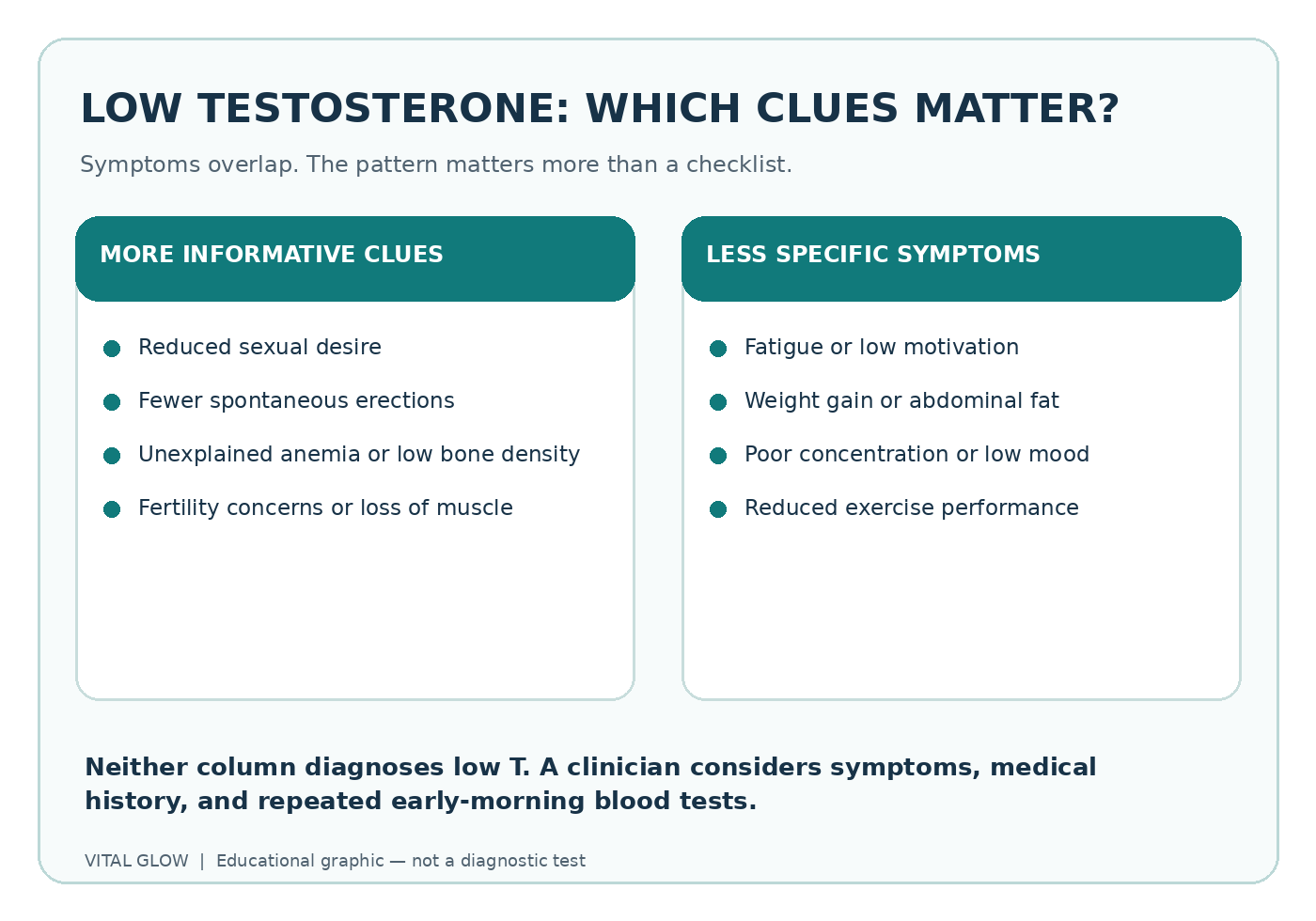
Why a symptom checklist cannot diagnose testosterone deficiency
Online questionnaires can help you organize what to discuss at an appointment. They are not reliable stand-alone diagnostic tests. The American Urological Association advises against using validated questionnaires to determine eligibility for testosterone treatment because symptoms overlap with so many other conditions.
The Endocrine Society likewise recommends diagnosing hypogonadism only when characteristic symptoms or signs are accompanied by consistently low, accurately measured testosterone levels.
For a deeper overview of common presentations, see our earlier article, Low Testosterone Symptoms in Men: When Should You Get Tested? This article focuses on how to interpret those symptoms without jumping to conclusions.
When is it reasonable to request testing?
Talk with a qualified clinician if you notice persistent low libido, fewer spontaneous erections, unexplained physical changes, infertility concerns, or a combination of symptoms affecting your life. Testing may also be considered for certain clinical findings, including unexplained anemia or low bone density.
An evaluation should include your health history, medications, sleep, other possible explanations, and appropriately timed laboratory work. Testosterone is usually measured in the early morning, and a low result must be confirmed on a separate morning before a diagnosis is made.
If testosterone is low, does that mean TRT is necessary?
Not necessarily. The clinician must assess why the level is low, whether the finding is persistent, how symptoms affect you, and whether treatment is appropriate. In some cases, addressing sleep, medications, excess weight, or another underlying condition is part of the plan.
TRT also has risks and monitoring requirements. It can suppress sperm production, making fertility plans especially important to discuss before starting. Men should not begin testosterone solely to address nonspecific tiredness or normal aging.
Vital Glow’s men’s testosterone and hormone care in Columbia, South Carolina, begins with a discussion of symptoms and health history, followed by appropriate laboratory evaluation when indicated. An evaluation does not obligate you to start treatment.
Frequently asked questions
Can I have low testosterone even if I still have normal erections?
Yes. Sexual symptoms vary, and erections depend on vascular, neurologic, psychological, and hormonal factors. A normal erection pattern does not rule out deficiency.
Is low energy the most reliable sign of low testosterone?
No. Fatigue has many possible causes. Sexual symptoms and certain objective findings may be more informative, but blood testing and clinical evaluation are still necessary.
Does a low testosterone result always mean something is wrong with my testes?
No. Low testosterone may arise from testicular causes or from problems involving the pituitary or hypothalamus. Temporary illness, medication effects, and other factors can also influence results.
Should every man over 40 be screened?
No. The Endocrine Society recommends against routine population-wide screening of men without symptoms or other clinical indications.
Start with an explanation, not an assumption
If persistent changes in sexual health, strength, or well-being have you wondering about testosterone, a careful evaluation can help distinguish hormone deficiency from other causes. Ask Vital Glow about a men’s hormone consultation to discuss what testing, if any, makes sense.
Clinical references
- Endocrine Society: Testosterone Therapy in Men With Hypogonadism
- American Urological Association: Evaluation and Management of Testosterone Deficiency
Medically reviewed by Candace Danbury, MSN, APRN, FNP-BC.